
บทความ

Gut Microbiota in Pigs: Why Microbial Balance Matters?
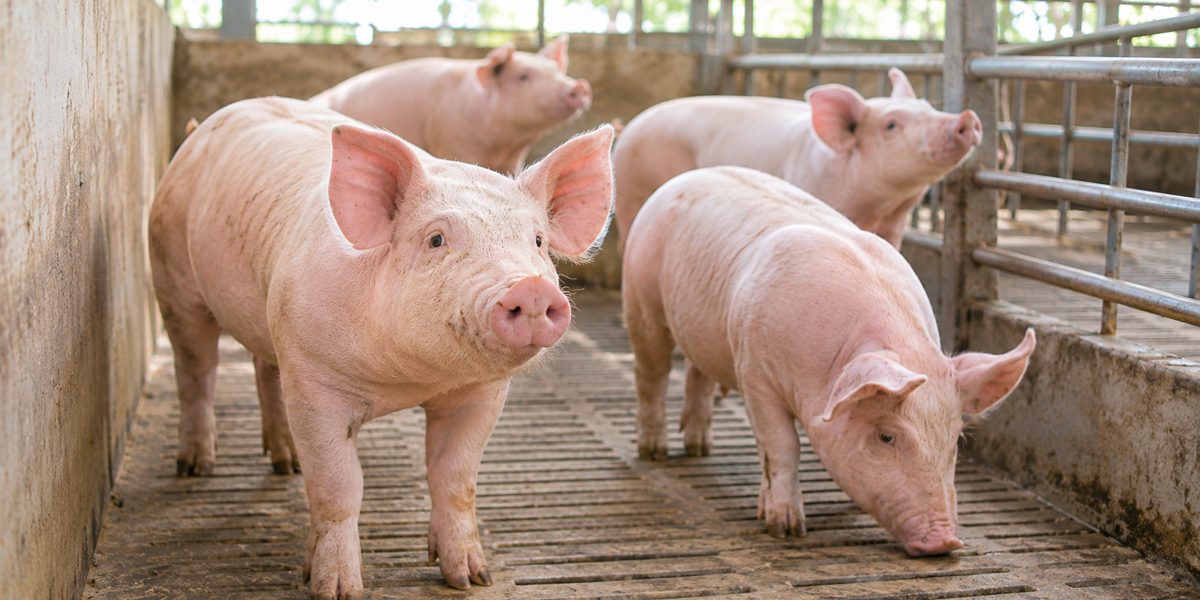 The pig gut microbiota is a complex, highly dynamic community of microorganisms residing within the animal’s gastrointestinal tract. In this article, we will introduce the composition of the pig gut microbiota, explore its primary functions, and examine the common causes of microbial imbalance.
We will also outline practical management strategies that pig farms can adopt to support a balanced intestinal microbial community. Understanding how to maintain microbial balance is important because gut microbiota plays a key role in supporting intestinal health and production performance in pigs.
What Is Gut Microbiota in Pigs?
When discussing the gut microbiota in pigs, we are referring to an exceptionally diverse and dense community of microorganisms that naturally inhabit the gastrointestinal tract. This complex assemblage encompasses billions of bacteria, archaea, fungi, and viruses. Bacteria are a major component of the pig gut microbiota and are widely studied in relation to intestinal health and production.Importantly, the gut microbiota cannot be oversimplified into a simple division of "good" versus "bad" microbes. Instead, it operates as a sophisticated, self-regulating ecosystem where countless distinct species coexist, share ecological niches, and continuously compete for space and essential substrates. These microorganisms continuously interact with the pig and respond to changes in its age, diet, and housing conditions. Far from being a static background population, this dynamic micro-ecosystem continuously evolves alongside the pig's physical development, playing a foundational role in maintaining internal homeostasis throughout every production phase.
Why Is Gut Microbiota Important for Pig Health and Performance?
The gut microbiota is much more than a passive group of microbes merely residing in the intestines. These microorganisms actively participate in essential daily processes, including feed digestion, nutrient utilization, the production of vital metabolites, the maintenance of the intestinal barrier, and critical immune regulation.Through these interconnected functions, the gut microbiota can influence intestinal health, feed efficiency, and growth performance in pigs. In the following sections, we will explore the importance of these microbes across four key physiological aspects.
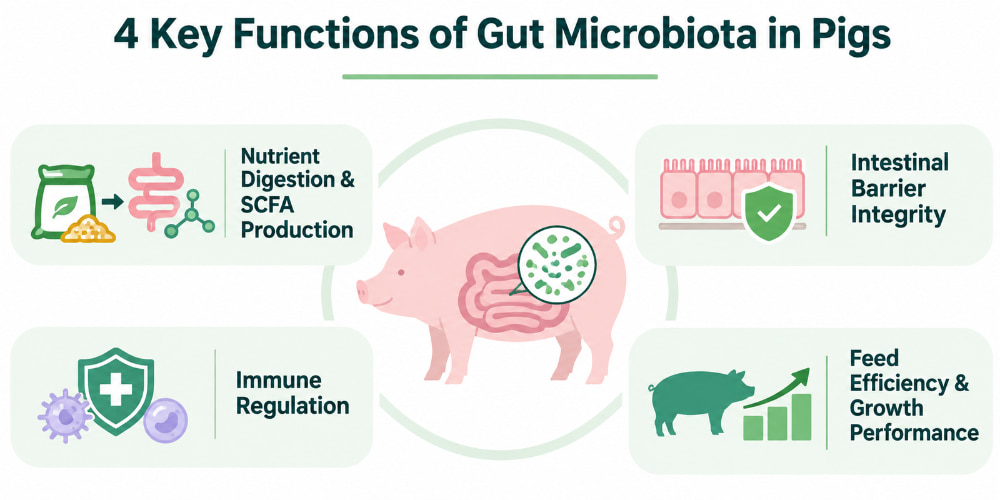
Nutrient Digestion and Short-Chain Fatty Acid Production
One of the primary roles of the gut microbiota is helping pigs break down complex nutrients that the animal’s own enzymes cannot easily digest, particularly various forms of dietary fiber. Through ongoing microbial fermentation, the gut microbiota produces vital metabolites known as short-chain fatty acids, primarily acetate, propionate, and butyrate.These short-chain fatty acids are incredibly valuable to the host pig. For example, butyrate serves as an important energy source for colonocytes and helps maintain intestinal barrier function. In addition, SCFA production contributes to the intestinal environment by influencing luminal pH and supporting interactions among gut microorganisms.
Intestinal Barrier Integrity
A healthy gut microbiota continuously interacts with the intestinal mucosa, the protective mucus layer, and the tight junctions located between epithelial cells. These interactions contribute to the maintenance of the intestinal barrier, which helps regulate the passage of substances between the intestinal lumen and the body's internal environment.Certain gut microorganisms and their metabolites can influence mucus production and the maintenance of tight junction proteins. When the microbial balance experiences significant disturbances, these changes in the gut microbiota are frequently accompanied by alterations in mucosal integrity and an undesirable increase in intestinal permeability. Such changes may weaken intestinal barrier function and increase susceptibility to intestinal disorders.
Immune Regulation
The ongoing interaction between the gut microbiota and the intestinal immune system is essential for maintaining systemic health. Specific microbial signals and various metabolites produced by these microorganisms actively participate in immune development, continuous immune regulation, and the overall maintenance of intestinal homeostasis.When discussing this relationship, it is more accurate to view it as a sophisticated regulatory dialogue. A balanced gut microbiota contributes to immune tolerance toward harmless dietary antigens while supporting appropriate responses to potential pathogens. These interactions help regulate intestinal immune responses and may reduce the risk of excessive or prolonged inflammation.
Feed Efficiency and Growth Performance
Because the gut microbiota is deeply involved in nutrient metabolism and shaping the intestinal environment, extensive research continuously explores the relationship between the microbiota, feed efficiency, weight gain, and overall growth performance. A well-balanced microbial ecosystem supports optimal nutrient absorption.However, the presence of particular microbial species does not necessarily translate into improved growth performance. Feed conversion efficiency is influenced by multiple factors beyond gut microbiota composition. Therefore, diet composition, disease status, environmental conditions, and overall farm management should also be considered when evaluating feed efficiency and growth performance.
〈Related Articles: Feed Conversion Ratio (FCR): Formula, Factors, and Ways to Improve Feed Efficiency〉
How Does Gut Microbiota Develop and Change in Pigs?
The development of the gut microbiota in pigs is a continuous, lifelong process. Gut microbiota continues to evolve from birth through nursing, weaning, growing, and finishing. These shifts are heavily influenced by the pig's diet, housing environment, and physiological development.The weaning stage requires special attention. During this critical period, piglets face multiple challenges, including maternal separation, an abrupt diet change from milk to solid feed, relocation to new facilities, and mixing with unfamiliar pen mates. These simultaneous changes can rapidly alter gut microbiota composition, making weaning a particularly sensitive period for intestinal health in piglets.
〈Related Articles: Unlock Profitable Growth and Optimize Piglet Weaning with Effective Strategies〉
How Are Pigs Exposed to Microorganisms on the Farm?
In any farm setting, pigs are exposed to a wide range of microorganisms every day. This exposure occurs through both vertical transmission and horizontal transmission. Key sources of microorganisms include the sow, her milk, skin, and feces. Additionally, pigs encounter microbes through their pen mates, feed, water, flooring, barn equipment, and even farm workers.However, exposure to microorganisms does not mean a pig will inevitably get sick. The true focus for producers should be on maintaining a balanced gut microbiota, closely monitoring the physiological status of the pigs, and minimizing environmental stress to ensure the microbial ecosystem remains stable.
What Causes Gut Microbiota Imbalance in Pigs?
Dysbiosis in the gut microbiota occurs when the originally stable microbial community or its functions undergo significant disturbance. It is not simply a matter of "bad bacteria increasing." Sudden changes in diet, environment, the pig’s physiological condition, or exposure to microorganisms may disturb this balance, allowing certain opportunistic bacteria to gain a competitive advantage.Weaning and Dietary Changes
In addition to stress from maternal separation and mixing with unfamiliar pigs, the transition from milk to solid feed is a major factor influencing the gut microbiota after weaning. In nursing piglets, the digestive tract is adapted to highly digestible, milk-based liquid carbohydrates and fats. Weaning forces an abrupt dietary transition to complex solid rations typically dominated by plant-derived starches, non-starch polysaccharides, and alternative protein sources.Because the piglet’s digestive system is still developing at this age, some feed may not be fully digested before reaching the large intestine. This undigested feed changes the nutrients available to gut microorganisms and may rapidly alter the gut microbiota. These changes can increase the risk of microbial imbalance, making weaning an important period for intestinal health management.
〈Recommended Products: Muco-defen®, Muco-defen® (water-soluble)〉
Environmental and Management Stress
Various environmental and management stressors can significantly impact the stability of the gut microbiota. Factors such as the accumulation of feces in the pens, high stocking density, sudden temperature fluctuations, transport, and the mixing of unfamiliar pigs all create considerable stress.These harsh conditions frequently lead to a reduction in feed intake and alter the pig's physiological status. Consequently, these physiological and behavioral shifts disrupt the normal intestinal environment, thereby increasing the likelihood of an unstable gut microbiota and subsequent production challenges.
Pathogen and Antimicrobial Pressure
When pathogenic pressure in the farm environment increases, potential pathogens may more easily colonize the gastrointestinal tract, challenging the resident gut microbiota.Furthermore, while antimicrobial treatments are sometimes necessary, they can simultaneously affect other non-targeted intestinal microorganisms. The actual impact on the gut microbiota depends heavily on the specific type of drug used, the dosage, the duration of the treatment, and the host's physiological status. Therefore, these interventions modify the competitive dynamics within the gut ecosystem.
〈Related Articles: Combatting PEDV: How to Reduce Mortality and Protect Your Herd〉
What Happens When Gut Microbiota Becomes Unbalanced?
Gut microbiota dysbiosis may also be associated with changes in the intestinal lining and the tight junctions that help seal the spaces between intestinal cells. These changes may weaken intestinal barrier function, making it easier for certain harmful substances to pass through the intestinal lining and trigger inflammation. The resulting effects on digestion and nutrient absorption may be associated with changes in feed intake, average daily gain, feed efficiency, and overall intestinal health.However, dysbiosis does not necessarily lead to clinical disease. Its effects vary depending on the nature of the microbial changes, the pig’s age and health status, and the feeding and management conditions. Some pigs may show no obvious signs, while others may become more vulnerable to additional challenges during weaning, dietary changes, or environmental stress. Therefore, changes in the gut microbiota should be considered alongside the pig’s condition and production records rather than used alone to judge intestinal health.
How Can Pig Farms Support a Balanced Gut Microbiota?
The primary goal for pig farms should never be to eliminate all bacteria from the pig's intestines, as sterile gut environments do not exist in healthy animals. Instead, modern management focuses on cultivating and sustaining a stable, resilient microbial ecosystem. Appropriate nutrition, reduced weaning and environmental stress, and suitable feed additives may help support intestinal health and reduce the risk of microbial imbalance.〈Related Articles: The Complete Guide to Sow Management and Feed Additives for Swine〉
Improve Hygiene and Biosecurity
Good hygiene and biosecurity practices help reduce the introduction and spread of potentially pathogenic microorganisms within pig farms. Practical measures include regular cleaning and disinfection of pens, appropriate manure removal, maintenance of drinking water systems, and monitoring the condition of feed storage areas. An all-in/all-out production system, where feasible, allows facilities to be cleaned and disinfected between groups of pigs and reduces contact between different age groups.Farm workers, visitors, tools, and transport equipment can also carry microorganisms between areas. Establishing controlled entry procedures, dedicated equipment, and clear movement routes may help limit pathogen transmission. These measures do not eliminate all microorganisms, nor do they directly establish a balanced gut microbiota. Rather, they reduce avoidable pathogen exposure and support a more consistent environment for intestinal health management. Their effectiveness depends on correct implementation and the pathogens present on the farm.
〈Related Articles: Understanding Coccidiosis: A Threat to Livestock Health〉
Manage Feed and Weaning Transitions
Feed intake and dietary transitions deserve particular attention around weaning, when piglets experience changes in diet, housing, and social conditions. Replacing milk-based nutrition with solid feed alters the nutrients available for digestion and microbial fermentation. Consequently, the gut microbiota may change as piglets adapt to the new diet.Farm managers can support this transition through suitable starter diets, accessible feed and clean drinking water, and close monitoring of feed intake. Where practical, introducing appropriate solid feed before weaning and avoiding unnecessary abrupt changes in feed formulation may help piglets adjust. Diets should be formulated according to the piglets' age and nutritional requirements rather than based solely on their potential effects on microorganisms. These practices may reduce nutritional and management stress, but they cannot prevent all changes in gut microbiota composition, which are also part of normal development.
Use Appropriate Nutritional Strategies
Nutritional strategies can play an important role in supporting intestinal health and maintaining microbial balance in pigs. Common approaches include selected dietary fibers, probiotics, prebiotics, postbiotics, and organic acids. These ingredients may influence the intestinal environment through different mechanisms, although their effects depend on the formulation, dosage, and physiological condition of the pigs.Probiotics are live microorganisms that provide health benefits when administered in adequate amounts, while prebiotics are substrates selectively utilized by host microorganisms that provide a health benefit. Postbiotics, in contrast, contain inanimate microorganisms and/or their components with demonstrated health benefits.
In addition to these approaches, fermentation-derived bioactive compounds such as surfactin have attracted interest for their antimicrobial properties. Muco-defen® from Life Rainbow Biotech is formulated with surfactin and is positioned as a nutritional solution for supporting intestinal health in pigs.
〈Related Articles: What Are Feed Additives and How Do They Benefit Livestock?〉
〈Related Articles: What is Surfactin? Exploring Its Mechanism of Action and Benefits〉
Support Pig Gut Microbiota with Muco-defen® from Life Rainbow Biotech
Maintaining intestinal health involves the interaction of diet, the gut microbiota, the intestinal barrier, and the pig's physiological condition. Nutritional additives may form part of a broader intestinal health management program, with their benefits depending on their functional ingredients and formulation.
Muco-defen® from Life Rainbow Biotech is a feed additive formulated with surfactin, a fermentation-derived cyclic lipopeptide produced by certain Bacillus strains. Research has demonstrated that surfactin possesses unique surface-active properties and antimicrobial activity, including its ability to interact with microbial cell membranes. These characteristics highlight surfactin's potential role in microbial management and make it a promising functional ingredient for supporting intestinal health in animal production.
Muco-defen® is positioned as part of a comprehensive intestinal health management strategy. Rather than focusing solely on eliminating bacteria, its formulation emphasizes supporting a balanced intestinal environment, aligning to maintain a stable and resilient gut microbial ecosystem. When integrated with proper feed quality management, hygiene, biosecurity, and veterinary guidance, Muco-defen® offers a complementary approach to intestinal health management.
For further information on Muco-defen® and its applications, contact Life Rainbow Biotech.
〈Related Articles: Elevate Livestock and Poultry Health with Postbiotic-Surfactin Supplement〉
Gut Microbiota FAQ
Is the Gut Microbiota the Same Throughout the Pig’s Intestinal Tract?
No. Gut microbiota composition varies among different regions of the gastrointestinal tract. Factors including pH, oxygen availability, nutrient availability, and intestinal transit time differ between the stomach, small intestine, and large intestine. These conditions can influence which microorganisms are present and their relative abundance.The small intestine is an important site of enzymatic digestion and nutrient absorption, whereas the large intestine is a major site of microbial fermentation of dietary components that escape digestion in the small intestine. Consequently, the types and relative abundance of microorganisms in these regions may differ considerably, although some microbial groups can occur in more than one region. Research findings from one intestinal location should therefore not automatically be generalized to the entire digestive tract.
Can Fecal Samples Fully Represent the Gut Microbiota?
Fecal samples are frequently used in pig gut microbiota research because they can be collected without invasive procedures and allow repeated sampling over time. They are useful for describing changes in fecal microbial communities and for comparing groups of pigs under different conditions.However, fecal samples do not fully represent the gut microbiota throughout the gastrointestinal tract. They generally provide more information about microorganisms associated with the distal intestinal tract than those living in the small intestine. Microorganisms associated with the intestinal mucosa may also differ from those present in the intestinal contents or feces. Therefore, conclusions drawn from fecal samples should be interpreted in relation to the sampling method and the specific research question.
How Is Gut Microbiota Analyzed in Pigs?
Researchers commonly examine fecal samples, intestinal contents, or intestinal mucosal samples to study the gut microbiota in pigs. A widely used method is 16S rRNA gene sequencing, which provides information about bacterial and archaeal community composition and diversity. Another approach, shotgun metagenomic sequencing, can identify microbial DNA across a broader range of organisms and examine genes associated with potential microbial functions.These methods provide different types of information. In particular, identifying microbial genes does not establish that the corresponding functions are being expressed or that specific metabolites are being produced. The results may also vary according to sampling location, DNA extraction, sequencing methods, reference databases, and analytical procedures. For this reason, differences among studies should be interpreted carefully rather than treated as direct evidence of better or worse intestinal health.
Conclusion
The gut microbiota participates in nutrient metabolism, intestinal barrier maintenance, and immune regulation in pigs. Its composition changes with age, diet, environmental conditions, and health status. Although disturbances in the gut microbiota may be associated with intestinal health and growth performance, these outcomes also depend on multiple factors beyond microbial composition.A practical approach to supporting intestinal health combines appropriate nutrition, careful management during weaning, and effective hygiene and biosecurity. Life Rainbow Biotech's Muco-defen®, a feed additive formulated with fermentation-derived surfactin, offers a promising nutritional approach to supporting intestinal health in pigs. With its unique surface-active properties and antimicrobial potential, surfactin provides a scientific foundation for exploring microbial management strategies.
Muco-defen® can be incorporated into comprehensive intestinal health management programs to complement existing nutritional and farm management practices. To learn more about Muco-defen® and its potential applications in swine , please contact Life Rainbow Biotech for further product information and consultation.
References:
Interactions between host and gut microbiota in domestic pigs: a review
Piglet gut microbial shifts early in life: causes and effects
Impact of Intestinal Microbiota on Growth and Feed Efficiency in Pigs: A Review
Gut Microbiota Dysbiosis in Postweaning Piglets: Understanding the Keys to Health
Impact of Early Weaning on Development of the Swine Gut Microbiome
Weaning stress and gastrointestinal barrier development: Implications for lifelong gut health in pigs
Husbandry practices and gut health outcomes in weaned piglets: A review
Weaning Age and Its Effect on the Development of the Swine Gut Microbiome and Resistome
The International Scientific Association of Probiotics and Prebiotics (ISAPP) consensus statement on the definition and scope of postbiotics
A mini-review: mechanism of antimicrobial action and application of surfactin

ไลฟ์เรนโบว์
Life Rainbow Biotech เป็นผู้ผลิตและวิจัยและพัฒนาสารเสริมอาหารสัตว์ปลอดสารปฏิชีวนะ โดยเน้นที่สารละลายไมโคท็อกซิน การควบคุมเชื้อก่อโรคในลำไส้ การเสริมสร้างภูมิคุ้มกัน และสารเสริมโภชนาการชนิดน้ำ
การจำแนกประเภทบทความ
บทความล่าสุด
- Gut Microbiota in Pigs: Why Microbial Balance Matters?
- แนวทางการแก้ปัญหาที่มีประสิทธิภาพในการป้องกันและรักษาโรค CRD ในสัตว์ปีกด้วยวิธีธรรมชาติและวิธีดั้งเดิม
- คู่มือฉบับสมบูรณ์เกี่ยวกับการจัดการแม่สุกรและสารเสริมอาหารสำหรับสุกร
- Chicken Heat Stress: Signs, Production Effects, and Management
- อัตราการเปลี่ยนอาหารเป็นเนื้อ (FCR): สูตร ปัจจัย และวิธีการปรับปรุงประสิทธิภาพการใช้อาหาร